
How I Bagged that Mastodon
by Tom Farmer, written for Scholars & Rogues.
Life in the Wrong Lane: Why Journalists Go in When Everyone Else Wants Out by Greg Dobbs is a vivid time-travel dispatch from the heyday of big-iron network TV news.
“Sadat has been shot. If you can get to Cairo, do it.”
Breathes there a real reporter who would not thrill to this flash, sent June 6, 1981 by ABC News to its forces across Europe? Got to ice that dinner date, honey. Here’s another chance to narrate history… and spend a fresh bucket of money.
In Life in the Wrong Lane, former ABC News correspondent Greg Dobbs speeds from London to Cairo within minutes of that terse directive, no doubt savoring the frisson of here-we-go adrenalin (I have no cash! No suitcase! Don’t know when or where I’ll sleep next! Let’s go, go, go!) that was once a basic fringe benefit of big-league TV news. Recounting stories in Egypt – or Libya, Belfast, Beirut, Gulf War I, pre-perestroika Moscow, you name it – Dobbs takes us inside the tense, addictive, free-spending, 24/7 subculture of global network news production as it used to be. In doing so he highlights its comparatively modest and curtailed state today.
Dobbs held down a gig at ABC News for 23 years, from the ‘70s to the ‘90s. He also worked domestically, but the great stories in Life in the Wrong Lane are datelined overseas. Reading this breezy, fascinating memoir – the title points out that as reporters cover catastrophes, they plunge down the wrong side of the road towards the action, past sane people clogging the escape routes – is like bellying up to the hotel bar after a filing deadline for a night of literal and figurative war stories, funny and sobering, from a man at the epicenter of the newsgathering business in its heyday.
Epicenter? Greg Dobbs? You thought Cronkite, Brokaw, and Jennings were the epicenter. Of editing and presentation, yes. But Dobbs takes us along for the dusty, dirty, dangerous, crazy-making field work that gave the anchors something to present, and makes us appreciate the logistic miracles behind worldwide TV news.
The ride can be terrifying and infuriating. Dobbs is nearly shot to death taping a standup in Teheran during the 1979 Islamic revolution. Trying to contact renegade ex-CIA arms runner Frank Terpil in Beirut, he misses getting car-bombed by seconds. He rides into Uganda with Tanzanian troops toppling Idi Amin, sees horrific atrocities amid days of misery and filth, but his work is all but bumped from World News Tonight by the simultaneous Three Mile Island nuclear crisis. Two motifs recur: the struggle (now quaint-seeming) to transmit words and video in a pre-digital, pre-broadband era, and the fight to get his New York bosses to air the best stuff. (Covering the aftermath of a ruinous Italian earthquake, Dobbs gets exclusive, heartbreaking footage of Pope John Paul II kissing the head of a deceased victim, then fields complaints from New York, asking if he has some inoffensive shots to “cover the scene of the Pope kissing the dead guy.”)
While Dobbs never explicitly answers the question in his rhetorical subtitle – why do journalists go in when everyone else wants out? – it’s clear enough. Going in is a narcotic. Reporters have to see. It’s also, um, fun.
It would be nice to say Life in the Wrong Lane will make you a smarter viewer of today’s news. But so much has changed, it ain’t necessarily so. What Dobbs mainly did – travel; see; report – is done less often and more gingerly. In their parlous states the American networks have for decades assiduously hacked at their own newsgathering capacity. Today many ABC News foreign bureaus are one-person home-office outposts equipped only with a laptop and DV camera. ABC covers the entire African continent this way, off a single kitchen table in Nairobi. (NBC News bases no staff in Africa at all, and neither NBC nor CBS staff India.) Next time there’s a ferry disaster or terror attack in Malaysia, Manila or Mumbai, watch carefully: a reporter in London will likely “cover the story” from her distant desk, scanning wire dispatches to narrate video beamed in from “partner organizations.” Sending guys like Dobbs to faraway places used to guarantee the provenance of the reporting. It’s cheaper not to, and the American public doesn’t seem to mind, but that doesn’t make it right. (Reporters do keep taking heroic risks in Iraq and Afghanistan, but see much of their work spiked in New York by show producers bored with the wars.)
Life in the Wrong Lane makes the reader happy but wistful. Like an appreciation of Detroit muscle cars, it’s a resonant snapshot of an all-but-concluded era in which the product had more heart, soul and meaning.
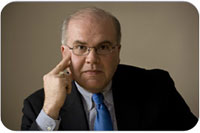
Tom Farmer was a CNN supervising producer and executive producer of Larry King Live. He is managing partner of Solid State Information Design.
————————————-
“Life’s” a Superb Read
By Joyce Laabs for The Lakeland Times.
“Life In The Wrong Lane” – Why Journalists Go In When Everyone Else Wants Out – by Greg Dobbs (iUniverse Inc.) is a book that should be read by anyone over age 12.
It takes the reader behind the scenes and we become aware of what is really risked by news correspondents as they get the story that we will see on our evening news.
Dobbs’s recollections are both funny and scary, as he and his team were at risk for their lives more times than they could count.
Dobbs traveled through more than 80 nations during his career, which has spanned over 40 years — first for ABC News and currently for HDNet Television.
For the older reader, it brings back details of incidents you may have put to the back of your mind. Incidents such as Wounded Knee: “The Night I Surrendered To A Cow;” the execution of Gary Gilmore, a double murderer: “The Light And Bright Side Of An Execution;” to Poland under Russian rule: “A Fistful Of Zlotis.” Even Afghanistan: “Welcome To My Country But Not For Long,” when Dobbs covered the Soviet invasion of the country in 1979.
It will be like a fun history lesson for those too young to remember these incidents.
Life In The Wrong Lane reveals:
- Amazing adventures “normal” people do everything to avoid.
- What reporters endure to cover a story.
- Is a story ever worth your life?
- What it takes to report in a foreign country.
- How reporting the news has changed over the past 40 or so years, or hasn’t.
- The best, worst and craziest aspects of the job.
- Can a news correspondent have a family and a successful career.
According to Dobbs: “This book is not an atlas of troubled places. Nor is it an encyclopedia of major events. The events I got to cover are part of history, but the experiences are evergreen. And I got to every one of them by living life in the wrong lane.”
Dobbs worked at ABC News for 23 years, starting in Chicago as an editor for ABC Radio’s Paul Harvey, then for ABC-TV as a producer.
In 1973 he became a correspondent and in 1977 he was assigned to ABC’s bureau in London and then in 1982 to Paris. In mid-1986 he went to ABC’s news bureau in Denver. In 1992, when asked to move to New York, he opted to retire from the network.
Dobbs has won two national Emmy awards. He hosted “Colorado State of Mind” for six years on Rocky Mountain PBS where he won a regional Emmy for “Best Interview/Discussion Program.” He has written opinion columns for The Denver Post and has reported and produced stories for National Geographic Television. He is currently a correspondent for HDNet Television, reporting documentaries for the program “World Report.”
The book sells for $13.95 and is available at iUniverse.com, BarnesandNoble.com and Amazon.com.
It would make a great Christmas gift for any news junkie on your list.